Quick takeaway
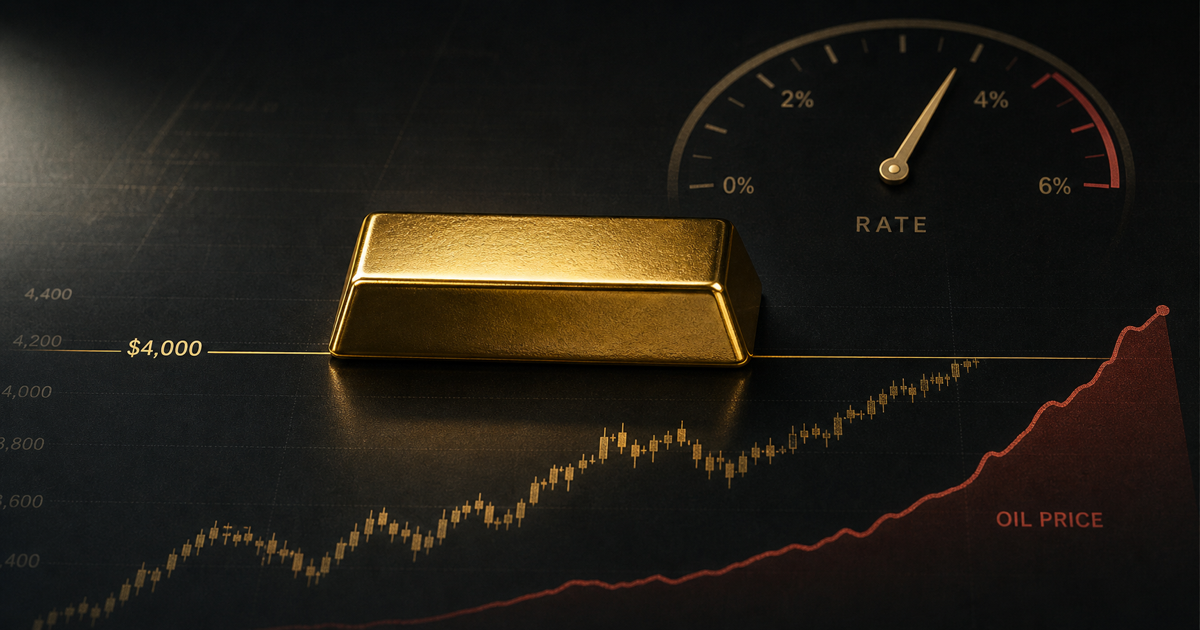
Friday's rebound helped gold defend the $4,000 area, but the weekly result says the rate story is still stronger than the fear trade.
What happened
Gold recovered on Friday, but not enough to change the message of the week.
Trading Economics showed gold at $4,016.95 an ounce on July 17, up 1.03% from the previous day. The same page said gold remained down more than 3% for the week, while Reuters described the move as gold's biggest weekly drop since early June.
That makes this update different from the July 16 break below $4,000. The daily move bounced. The weekly verdict did not. Gold finished the week with the $4,000 area still in view and the market still focused on oil, inflation, and the Federal Reserve.
Why it matters
Gold often gets support when geopolitical risk rises, but this week showed why the reaction can be messy.
Escalating U.S.-Iran tension kept oil in focus. Higher oil can make investors worry about inflation, and inflation worries can make the market expect the Federal Reserve to keep policy tighter or even raise rates again. Trading Economics said markets were pricing roughly even odds of a September rate increase after hawkish Fed comments.
That is the problem for gold. Bullion does not pay interest, so higher expected rates make cash and bonds harder competition. In a cleaner safe-haven week, fear might have been enough to lift gold. This week, the yield penalty kept winning.
The Friday rebound still matters because it shows buyers have not abandoned the $4,000 area. But a rebound inside a weak week is not the same as a reset.
What to watch next
The first signal is whether gold can hold the $4,000 area when markets reopen. A clean hold would make Friday's rebound more credible. Another break would keep the weekly-loss story in control.
The second signal is oil. If energy prices calm, the inflation-and-Fed pressure around gold may ease. If oil keeps rising on Hormuz or wider Middle East headlines, the rate story can stay heavy even while geopolitical risk remains high.
The third signal is Fed communication. Gold does not need every official to sound dovish, but it does need the market to believe the next rate move is less threatening. Until then, fear alone may not be enough.