Quick takeaway
Friday's stabilization matters, but the market is still valuing gold through oil, inflation and expected interest rates more than through geopolitical fear alone.
What happened
Gold steadied near $4,050 on Friday after falling nearly 2% in the previous session.
Trading Economics showed gold at $4,063.31 an ounce on July 24, up 0.33% from the previous day. Its market note said investors were watching Middle East developments for signs of further energy-driven inflation risk and what that could mean for U.S. interest rates.
The stabilization is the new signal. Thursday's selloff showed that higher oil, Treasury yields and the dollar could overwhelm the haven bid. Friday's modest recovery stopped the slide, but it did not reverse that valuation story.
Why it matters
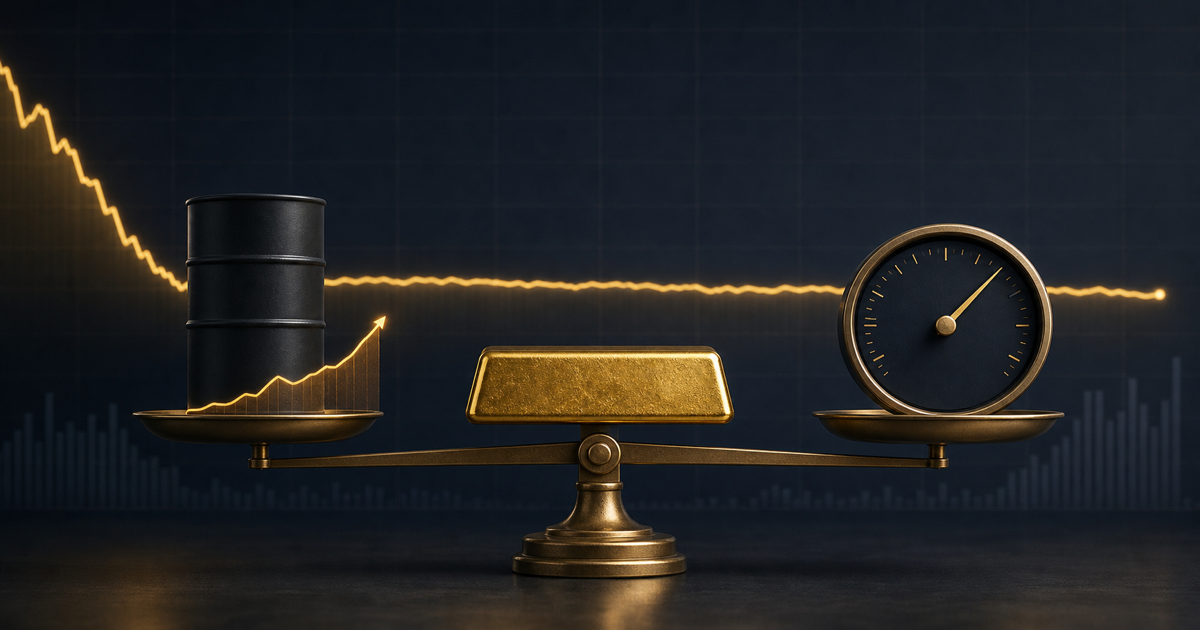
Gold is still caught between two consequences of the same geopolitical risk.
Supply threats in the Gulf can support gold by increasing demand for protection. But they can also lift oil prices, strengthen inflation expectations and make higher interest rates look more likely. That second chain raises the opportunity cost of holding non-yielding bullion.
Trading Economics said markets were pricing roughly an 80% probability of a September Fed rate increase. Next week's Fed meeting is widely expected to leave rates unchanged, so the statement and press conference may matter more than the decision itself.
CME Group identifies inflation data, Fed decisions, the dollar and interest-rate changes as key gold-market drivers. Friday's price action fits that map: gold found its footing, while the policy outlook continued to limit the rebound.
What to watch next
The first signal is whether gold can hold the $4,050 area after Thursday's break below $4,100. A steadier base would suggest the initial rates repricing has run its course; another sharp decline would show that sellers still control the move.
The second signal is oil. Cooling energy prices would weaken the inflation case for tighter policy, while renewed gains would keep the pressure on non-yielding gold.
The third signal is the Fed's July 29 meeting. Markets broadly expect no immediate rate change, but any guidance on energy inflation and September policy could reset yields, the dollar and gold together.