Quick takeaway
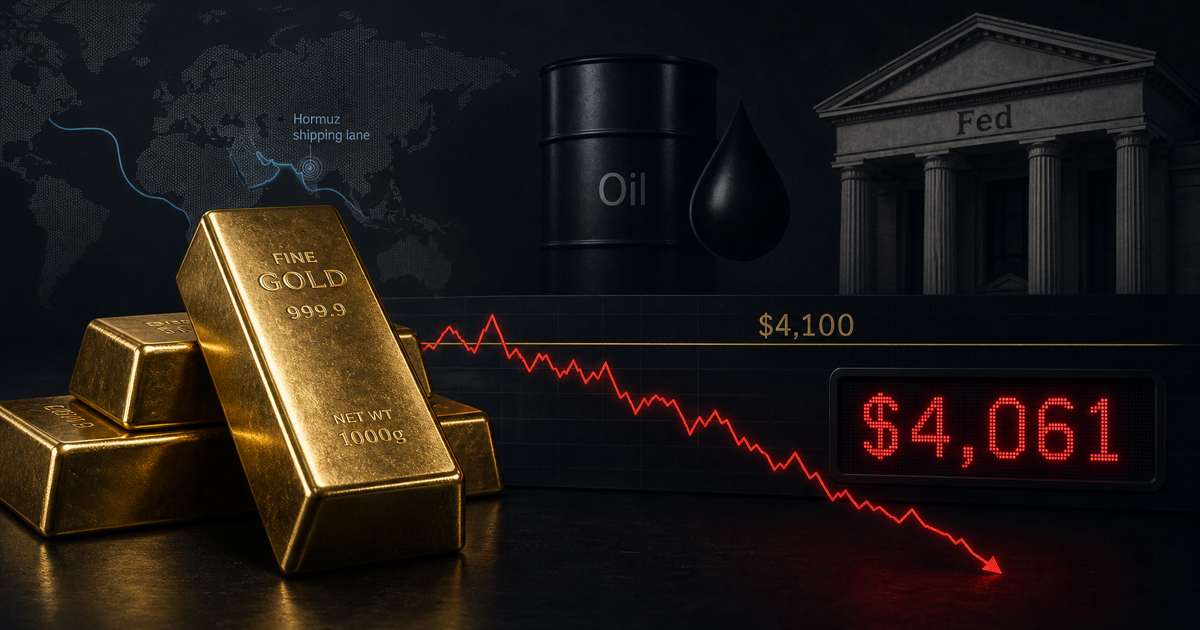
Gold's drop below $4,100 is not just a price-level story. The market is weighing whether oil and geopolitical risk will keep inflation pressure high enough to make the Fed a bigger problem for bullion.
What happened
Gold broke below the $4,100 line after another round of geopolitical stress pushed the market back toward inflation and interest-rate worries.
Trading Economics showed gold at $4,061.35 an ounce for July 13, down 1.45% on the day. The same update said gold had fallen 5.76% over the past month while still remaining 21.50% higher than a year earlier.
The pressure came from the way traders read renewed U.S.-Iran tension. Trading Economics said the U.S. carried out a fourth strike in a week against Iran after an attack on a Cyprus-flagged container ship, while Tehran claimed the Strait of Hormuz was closed until further notice. U.S. Central Command disputed that claim, but the market still had to price the oil-risk channel.
Why it matters
Gold often benefits from geopolitical fear, but the current market is not treating conflict as a simple safe-haven trade.
The key link is oil. If traders think tension around the Strait of Hormuz could lift energy prices, they also have to think about inflation. If inflation pressure stays sticky, the Federal Reserve has less room to ease and more reason to keep policy tight or even raise rates again.
That matters for gold because bullion does not pay interest. When markets expect higher rates, cash and bonds become harder competition, even when the news backdrop looks stressful.
Trading Economics said markets were expecting one more Fed rate hike before the end of the year, while investors were waiting for U.S. inflation data and Fed Chair Kevin Warsh's first congressional testimony on Tuesday.
What to watch next
The next test is whether the Hormuz and oil story fades or becomes a lasting inflation worry. If oil calms down, gold may get some relief from the rate-pressure side of the trade. If oil keeps rising, the Fed story can keep weighing on bullion even while geopolitical risk stays elevated.
The second test is U.S. inflation data. A cooler reading would challenge the rate-hike pressure. A hotter reading would make the market's concern easier to understand.
For InGold.today readers, the plain-English version is this: gold is still a long way above last year's level, but the short-term market is asking whether the Fed will matter more than fear.