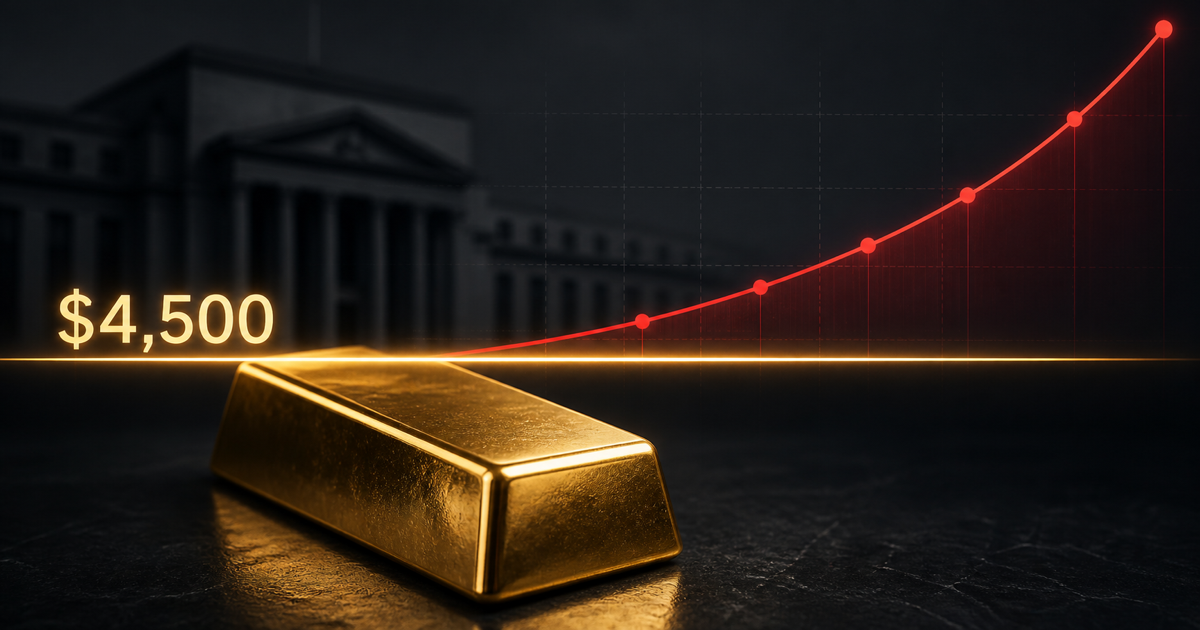
Gold Breaks Below $4,500 as Warsh Turns Inflation Anxiety Into a Rate-Hike Bet
Gold fell 3.18% to about $4,454 after Fed Chair Kevin Warsh warned that inflation is not meaningfully slowing, pushing September rate-hike odds toward 50%.
Listen to this update
Ready when you are.
Quick takeaway
Warsh's first major policy speech resolved this week's gold valuation contest in favor of rate pressure. Friday's 3.18% fall below $4,500 does not erase an approximately 9.5% monthly advance, but bulls now need to reclaim that level before the August rally can regain momentum.
Gold's calm near $4,600 ended abruptly
Gold fell 3.18% on Friday to about $4,454 per ounce, its lowest level in a week, after Federal Reserve Chair Kevin Warsh used his first major policy speech to challenge the market's hope that inflation pressure was easing.
The move took bullion below $4,500 only a day after it had remained resilient near $4,600 despite a hot personal consumption expenditures report. That resilience had suggested debt and dollar-debasement concerns were offsetting the usual rate pressure. Warsh's message changed the balance.
A one-day selloff does not by itself end the broader rally. Gold remains up roughly 9.5% over the past month, but the speed of Friday's reversal shows how much of that advance had depended on interest-rate expectations staying benign.
Warsh put another rate increase back at the center of the debate
Warsh said inflation is not meaningfully slowing and argued that financial conditions are not restrictive. He also warned that policymakers may still have "work to do," language investors interpreted as keeping another increase in the federal-funds rate firmly in play.
Markets pushed the implied probability of a September rate hike toward 50% after the speech. Futures-implied probabilities can move quickly and are not a forecast from the Federal Reserve, but the repricing shows that traders saw the remarks as materially more hawkish than the balance reflected in gold before Friday.
That matters because tighter policy tends to lift inflation-adjusted, or real, interest rates. Gold produces no income, so higher real yields increase the opportunity cost of holding bullion relative to cash and government bonds.
$4,500 becomes the first recovery test
The break below $4,500 turns that round number from support into the first level bulls need to reclaim. A quick recovery would suggest Friday's move was a sharp repricing inside an intact monthly trend rather than the start of a deeper reversal.
Failure to regain the level would leave gold more exposed to further pressure from rising Treasury yields and a firmer U.S. dollar. Those channels transmit a hawkish Fed outlook into bullion: bonds become more competitive and dollar-priced gold becomes more expensive for buyers using other currencies.
The next signal therefore comes from confirmation, not simply from Friday's closing price. Gold must show that buyers are willing to return after the market has absorbed a materially higher probability of near-term tightening.
The larger August trend is bruised, not yet broken
Gold's roughly 9.5% monthly gain still leaves the metal well above where August began. That cushion distinguishes Friday's drop from a confirmed trend reversal and preserves the possibility that fiscal, debt and currency concerns will re-emerge as support after the rate shock settles.
But the burden of proof has shifted. Earlier in the week, gold could absorb sticky inflation because investors doubted the Fed would respond aggressively. Warsh's speech made that assumption less comfortable, so the same inflation anxiety now carries a clearer risk of tighter policy.
For InGold.today readers, the valuation story is straightforward: watch whether $4,500 is reclaimed, then check whether Treasury yields and the dollar validate that recovery. Without confirmation from those markets, the August rally remains vulnerable to another leg of real-rate pressure.
What to watch next
Whether gold quickly reclaims $4,500 or begins treating it as resistance.
Changes in futures-implied odds of a September Federal Reserve rate increase.
The response in Treasury yields and the U.S. dollar as markets continue to digest Warsh's message.
Whether gold's approximately 9.5% monthly gain attracts dip buyers after Friday's 3.18% fall.
Upcoming inflation and labor-market data for evidence that supports or weakens the hawkish policy case.
This update is educational market context, not financial, trading, tax or investment advice.